
Why Giant Printing Outshines the Competition in Custom Backdrop Printing
When choosing custom backdrop printing, the printing process and fabric type are the two pillars that determine quality, durability, and impact. Giant Printing’s 2-step printing method paired with their eco-friendly recycled fabric sets a benchmark that other options struggle to reach.

To convince you why this combination is superior, let’s compare it to common printing processes and fabric types used by competitors, highlighting their shortcomings and why Giant Printing’s approach is the smarter choice.
Giant Printing’s Winning Combo: 2-Step Printing and Recycled Fabric
First, let’s recap Giant Printing’s approach:
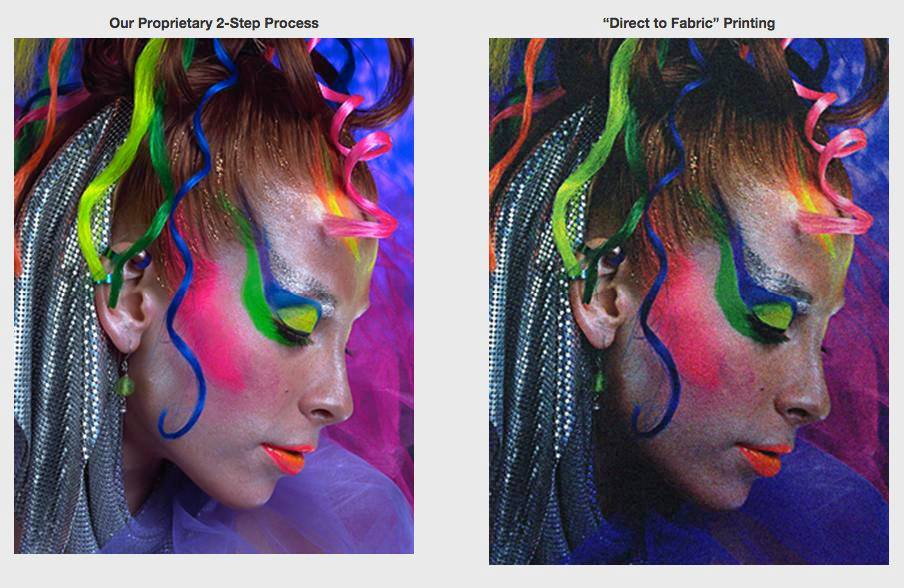
- 2-Step Printing Process: Designs are printed in high resolution onto transfer paper, then heat-transferred onto fabric, embedding ink deep into the fibers for vibrant, durable results.
- Fabric Type: Giant Printing uses 100% Repreve® recycled fabric, made from post-consumer PET (recycled plastic bottles) and pre-consumer waste. It’s lightweight, wrinkle-resistant, machine-washable, and eco-friendly, meeting rigorous environmental standards.
This duo delivers sharp visuals, long-lasting performance, and sustainability—qualities that other methods and materials often compromise on. Now, let’s stack it up against the alternatives.
Comparing Backdrop Printing Processes
Here’s how Giant Printing’s 2-step process compares to other common methods, why competitors hype them up, and where they fall short:

Direct-to-Fabric Printing (DTF)
- Buzzwords: “Quick,” “simple,” “cost-effective.”
- How It Works: Ink is sprayed directly onto fabric via inkjet printers.
- Drawbacks: The ink sits on the surface, not in the fibers, leading to a stiff texture and muted colors. It’s prone to cracking, fading, and wrinkling—especially on large backdrops. Resolution suffers, making fine details blurry. Compared to Giant Printing’s embedded ink, DTF feels cheap and short-lived, lacking the depth and durability you need for a standout backdrop.
Traditional Dye Sublimation (Single-Step)
- Buzzwords: “Vivid,” “fabric-friendly,” “professional.”
- How It Works: Ink is heated into a gas and infused directly into fabric, often without a transfer paper step. Ink is sprayed directly on to the fabric and then heat infused
- Drawbacks: Without the precision of Giant Printing’s transfer paper stage, ink can bleed, reducing sharpness—especially on complex designs. Durability takes a hit compared to the 2-step method’s deep ink penetration. Colors may fade faster, and the fabric can feel less refined.
Screen Printing
- Buzzwords: “Bold,” “traditional,” “graphic-heavy.”
- How It Works: Ink is pushed through stencils onto fabric, one color at a time.
- Drawbacks: It’s impractical for large backdrops—costly, time-consuming, and low-resolution. Fine details get lost, and the surface-level ink cracks over time. Giant Printing’s 2-step process handles intricate, multi-color designs effortlessly, leaving screen printing in the dust for anything beyond simple logos.

Vinyl Printing (Solvent or UV)
- Buzzwords: “Durable,” “large-format,” “weather-resistant.”
- How It Works: Ink is printed onto vinyl banner material, often cured with UV light or solvents.
- Drawbacks: Vinyl isn’t fabric—it’s heavy, creases and cracks easily, and reflects light awkwardly. Colors lack depth, and outdoor fading is common with solvent inks. Giant Printing’s fabric-based 2-step method offers a softer, more professional look with better longevity and no vinyl downsides.

Generic Digital Inkjet
- Buzzwords: “Fast,” “on-demand,” “versatile.”
- How It Works: Basic inkjet printers spray ink onto various surfaces.
- Drawbacks: Inconsistent quality, shallow ink penetration, and fading are rampant. It’s a budget option that can’t match the vibrancy or durability of Giant Printing’s heat-transfer precision. Your backdrop deserves better than a quick-and-dirty print job.
Why Giant Printing Wins: The 2-step process ensures photographic-quality prints, wrinkle-resistant fabric, and colors that stay vivid for years—something these alternatives can’t consistently deliver.
Comparing Backdrop Fabric Types
Now, let’s look at Giant Printing’s Repreve® recycled fabric versus other common backdrop materials, breaking down their properties and pitfalls:
Giant Printing’s Repreve® Recycled Fabric
- Composition: Made from recycled PET (plastic bottles) and pre-consumer waste, certified eco-friendly.
- Pros: Lightweight, soft, wrinkle-resistant, machine-washable, and durable. It pairs perfectly with the 2-step process, absorbing ink deeply for vibrant, fade-resistant results. Plus, it’s sustainable—reducing landfill waste and petroleum use.
- Best For: Trade Shows and Events needing a professional, eco-conscious edge with long-term use.
Standard Polyester Backdrops
- Common Use: Widely used in dye-sub and DTF printing.
- Pros: Affordable, synthetic, takes ink decently.
- Cons: Often virgin polyester (not recycled), less eco-friendly. Without Giant Printing’s heat-transfer method, it can feel stiff or wrinkle-prone, and durability lags. Colors may not pop as much or last as long.
- Why It’s Inferior: Lacks the sustainability and refined finish of Repreve®, especially when paired with less precise printing.

Vinyl (PVC) Backdrops
- Common Use: Solvent or UV printing for banners and backdrops.
- Pros: Tough, weather-resistant for short-term outdoor use.
- Cons: Heavy, creases and cracks easily, and looks cheap under lights. It’s not recyclable like Repreve®, and its glossy finish clashes with fabric’s elegance. Not washable—once dirty, it’s done.
- Why It’s Inferior: Vinyl can’t match the soft drape, portability, or eco-credentials of Giant Printing’s fabric.

Cotton or Cotton Blends Backdrops
- Common Use: Screen printing or basic digital inkjet.
- Pros: Natural, soft feel; eco-friendly if organic.
- Cons: Wrinkles badly, hard to print on with high resolution (ink bleeds), and less durable than synthetics. It’s impractical for large backdrops and doesn’t pair well with advanced printing like Giant’s 2-step method. Cotton requires lots of water and pesticides to grow.
- Why It’s Inferior: Cotton can’t handle the precision or vibrancy Repreve® delivers, and it’s a hassle to maintain.
Nylon Banners
- Common Use: Occasionally used for lightweight banners.
- Pros: Strong, lightweight, flexible.
- Cons: Tricky to print on—colors can fade or bleed without specialized processes. It’s less common for backdrops due to cost and printing challenges. Repreve® outperforms it in sustainability and print quality.
- Why It’s Inferior: Nylon’s niche use doesn’t rival Repreve®’s versatility or eco-impact.

Polyester Stretch (Tension Fabric)
- Common Use: Tension displays with dye-sub printing.
- Pros: Stretchy, wrinkle-resistant, good for frames.
- Cons: Often virgin material, not recycled. Without Giant Printing’s 2-step precision, prints can lack sharpness or depth. It’s similar to Repreve® but misses the eco-edge and optimized ink bonding.
- Why It’s Inferior: Repreve® does everything stretch polyester can, plus it’s greener and better suited to the 2-step process.
Why Giant Printing’s Fabric Wins: Repreve® recycled fabric combines sustainability with practicality—lightweight, washable, and wrinkle-free—while enhancing the 2-step process’s vivid, durable output. Competitors’ fabrics either sacrifice quality, eco-friendliness, or both.
So, why settle for less?
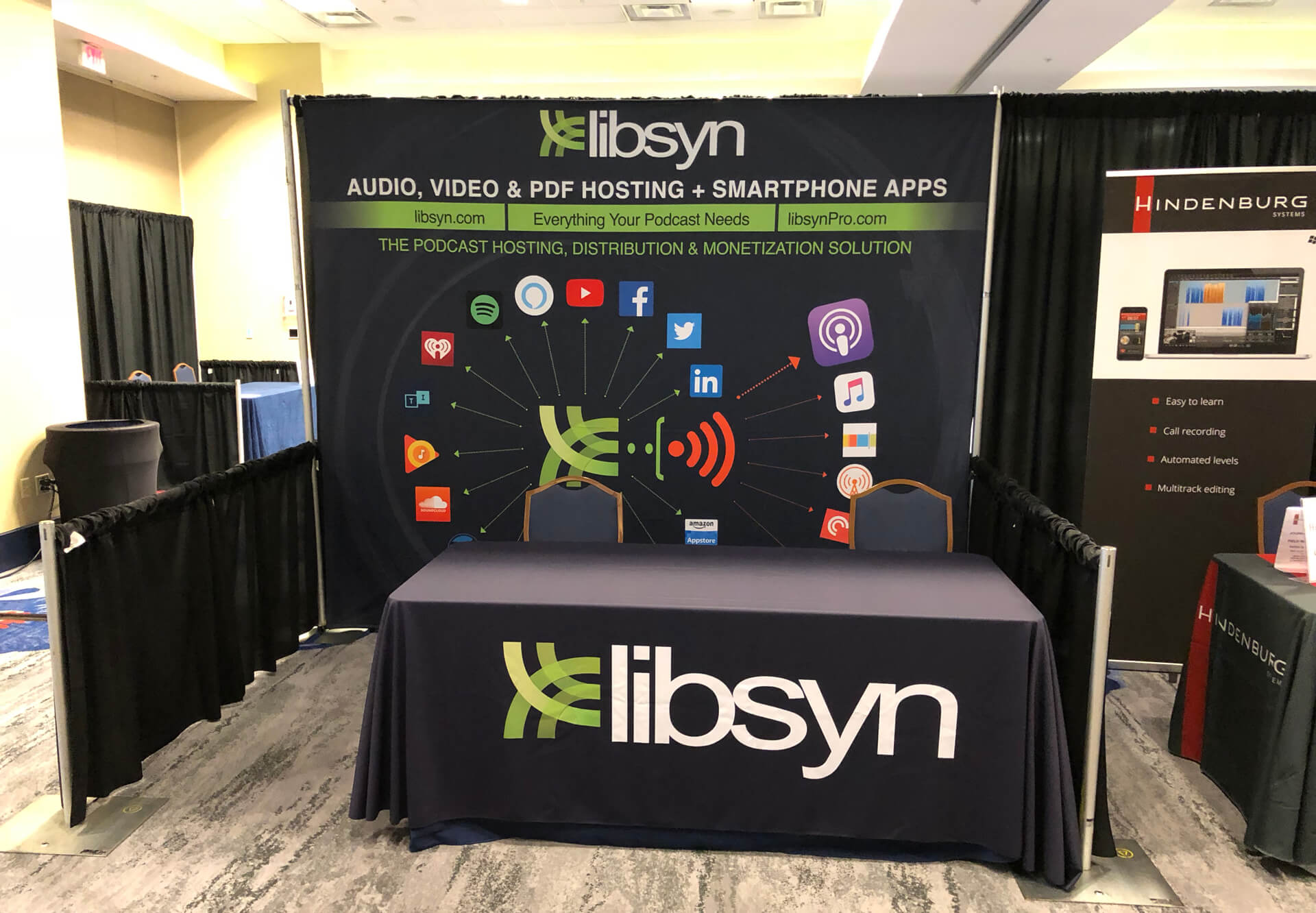
Imagine your backdrop at a trade show: Giant Printing’s 2-step process and Repreve® fabric deliver a crisp, eye-catching design that drapes flawlessly, resists wear, and aligns with eco-conscious values. Compare that to a stiff, faded DTF polyester print, a creased vinyl banner, or a blurry cotton backdrop—they just don’t compete. Other methods might tout “speed” or “cost,” but they cut corners where it matters: impact and longevity. Giant Printing’s approach is an investment in a backdrop that wows every time, not just once.
With Giant Printing, you get a custom backdrop that’s sharper, tougher, greener, and more professional than the rest. Choose the 2-step process and Repreve® fabric—because your event deserves the best, and the planet does too.
Give Us a Call at (512) 821-2022. Let’s talk about your options. There’s no obligation.